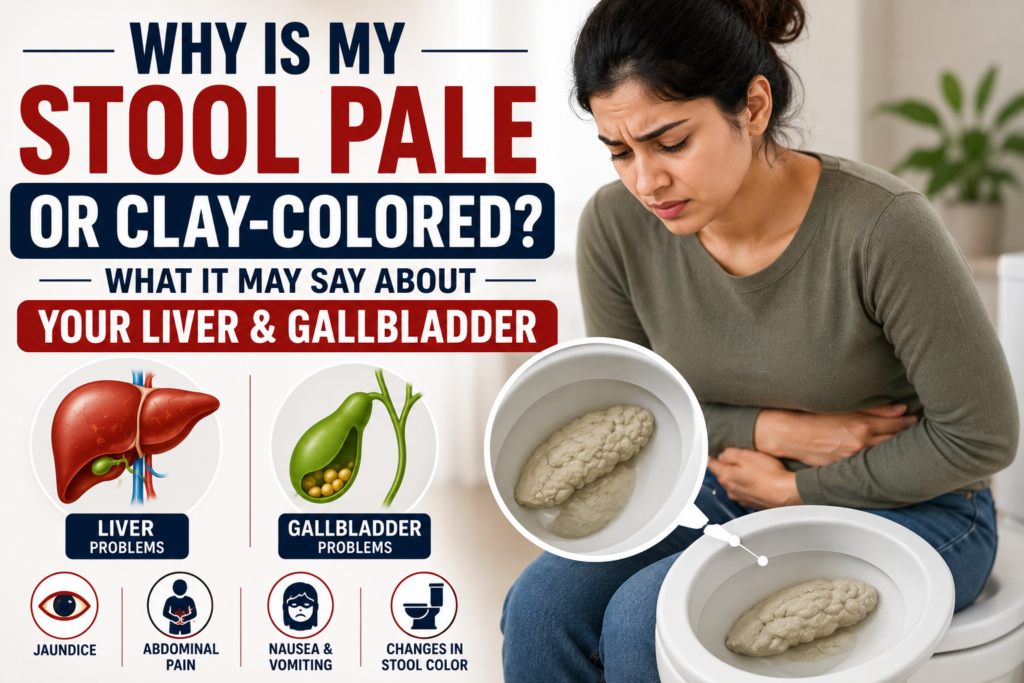
Noticing your stool has turned pale, light, or clay-colored can be unsettling — and unlike many digestive symptoms, this one is worth taking seriously rather than waiting out. Stool color is directly linked to bile, a substance produced by your liver and released by your gallbladder, which means pale or clay-colored stool often points to something happening in one of these organs. Here’s what this symptom can mean and when it needs medical attention.
Why Does Stool Color Depend on Your Liver and Gallbladder?
Your stool’s normal brown color comes from bile, a digestive fluid produced by the liver and stored in the gallbladder, which is released into the intestine to help digest fat. Bile contains a pigment that, as it breaks down through digestion, gives stool its typical brown shade. When bile production is reduced or blocked from reaching the intestine, stool loses this pigment and appears pale, light tan, or clay-colored instead.
Common Causes of Pale or Clay-Colored Stool
Bile Duct Blockage
A blockage in the bile ducts — often caused by gallstones — prevents bile from reaching the intestine, directly resulting in pale stool. This is one of the most common causes and often comes with other symptoms like abdominal pain, especially after fatty meals.
Liver Disease
Conditions affecting the liver’s ability to produce or process bile properly, such as hepatitis or more advanced liver cirrhosis, can reduce bile output and lead to lighter-than-normal stool over time.
Gallbladder Problems
Inflammation or blockage of the gallbladder can interrupt the normal flow of bile into the digestive tract, leading to pale stool alongside symptoms like right-sided abdominal pain, particularly after eating.
Pancreatic Issues
Since the pancreas also plays a role in digestion, conditions like pancreatitis or a blockage near the bile duct caused by pancreatic swelling can also result in pale stool.
Medications
Certain medications, including some antacids containing aluminum hydroxide, can occasionally cause temporary pale stool unrelated to a liver or gallbladder issue — though this should still be discussed with your doctor if it persists.
Symptoms That Often Accompany Pale Stool
- Yellowing of the skin or eyes (jaundice)
- Dark urine
- Itchy skin
- Abdominal pain, especially in the upper right side
- Nausea or loss of appetite
- Fatigue
If pale stool appears alongside any of these, it strengthens the likelihood of a liver or bile-related cause and makes prompt evaluation more important.
Is Pale Stool Always a Sign of a Serious Problem?
Not necessarily every single time — an isolated, one-off instance can sometimes be linked to certain foods, medications, or a minor, temporary digestive upset. But persistent pale or clay-colored stool, especially lasting more than a day or two, or appearing alongside jaundice, should never be dismissed, since it often reflects a genuine problem with bile flow that needs medical evaluation.
When Should You See a Gastroenterologist?
You should seek medical attention if:
- Pale or clay-colored stool persists for more than a day or two
- It’s accompanied by yellowing of the skin or eyes
- You notice dark urine alongside pale stool
- There’s abdominal pain, especially in the upper right side
- You feel unusually fatigued or unwell alongside the change in stool color
At Samarpan Gastro and Liver Clinic, Dr. Shekhar Puri helps patients quickly identify whether pale stool is linked to a liver, gallbladder, or bile duct issue, so treatment can begin promptly rather than waiting for the problem to worsen.
How Is the Cause Diagnosed?
- Blood Tests — to check liver function, bilirubin levels, and signs of infection or inflammation
- Ultrasound — to check for gallstones, bile duct blockage, or liver abnormalities
- Endoscopy — if further evaluation of the digestive tract is needed, available through our endoscopy services
- CT or MRI Imaging — for a more detailed look at the bile ducts and surrounding organs if needed
What Happens After Diagnosis?
Treatment depends entirely on the underlying cause and may include:
- Procedures to clear a blocked bile duct
- Treatment for gallstones, ranging from medication to surgical removal in more significant cases
- Managing the underlying liver condition if that’s the root cause
- Addressing pancreatic inflammation if it’s contributing to the blockage
Stool color typically returns to normal once bile flow is restored and the underlying issue is properly treated.
FAQs
Is pale stool always related to the liver? Not always, but it’s commonly linked to bile flow issues involving the liver, gallbladder, or bile ducts, which is why it should be evaluated rather than ignored.
What does clay-colored stool combined with dark urine mean? This combination often points to a bile flow problem, such as a bile duct blockage or liver issue, and should be evaluated promptly.
Can gallstones cause pale stool? Yes, if a gallstone blocks the bile duct, it prevents bile from reaching the intestine, which can result in pale or clay-colored stool.
How long can pale stool last before it’s a concern? If pale stool persists for more than a day or two, or comes with other symptoms like jaundice or abdominal pain, it’s worth getting evaluated rather than waiting.
Which doctor should I see for pale or clay-colored stool? A gastroenterologist can evaluate whether the cause is related to your liver, gallbladder, or bile ducts and guide you toward the right treatment.
Related Reads:
- Jaundice: Causes, Symptoms & Treatment
- Liver Cirrhosis: What You Need to Know
- Pancreatitis Treatment in Varanasi
- Why Do I Feel Pain on the Right Side of My Stomach After Eating?
- Digestive Disorders — Full Service Page
- Endoscopy Services in Varanasi
Noticed pale or clay-colored stool? Book a consultation at Samarpan Gastro and Liver Clinic, Varanasi, and get to the root cause.
