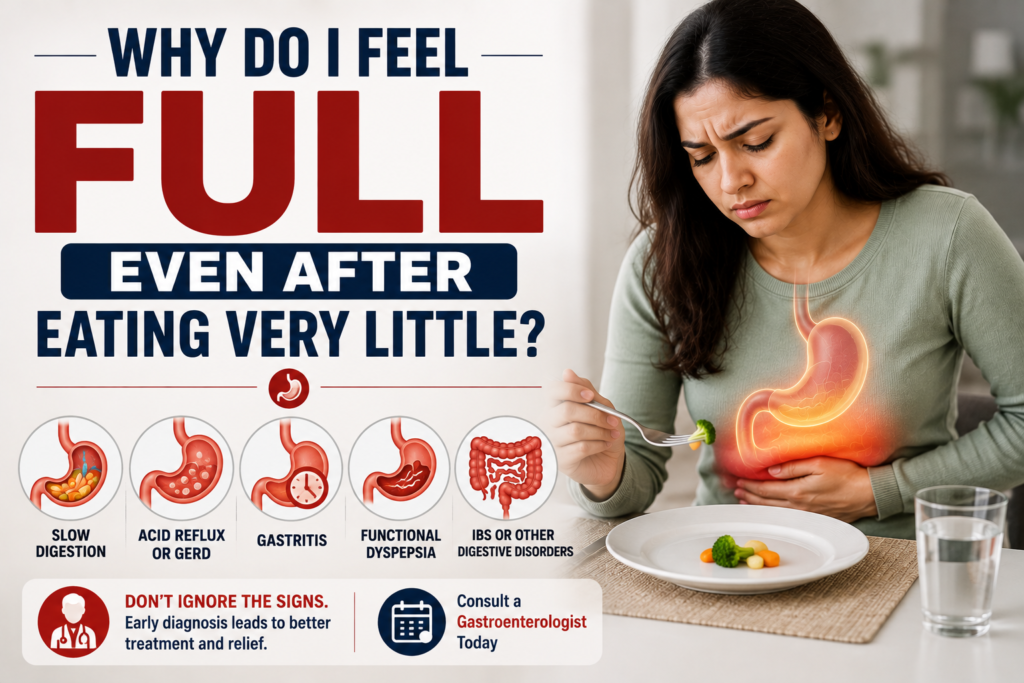
Feeling completely full after just a few bites — even when you were genuinely hungry beforehand — can be confusing and, over time, concerning. This experience, known medically as early satiety, is your digestive system’s way of signaling that something isn’t processing food the way it normally should. Here’s what typically causes this feeling, and when it’s worth getting evaluated.
What Is Early Satiety?
Early satiety refers to feeling full much sooner than expected during a meal, often after eating only a small amount. Occasionally feeling this way — after a big meal the day before, or during a stressful week — isn’t usually a concern. But when it happens regularly, or is accompanied by other symptoms, it often points to an underlying digestive cause that affects how your stomach processes and moves food.
Common Digestive Causes of Feeling Full After Eating Little
Gastritis
Inflammation of the stomach lining can make your stomach more sensitive, leading to a feeling of fullness, discomfort, or bloating well before you’ve eaten a normal amount.
Peptic Ulcers
An ulcer in the stomach or upper intestine can cause early fullness, particularly because eating can trigger discomfort that makes continuing to eat feel unpleasant. Our peptic ulcer treatment page covers this condition in more detail.
Delayed Stomach Emptying (Gastroparesis)
When the stomach empties more slowly than it should, food lingers longer than usual, creating a persistent feeling of fullness even after small meals. This can be linked to diabetes, certain medications, or nerve-related digestive issues.
Acid Reflux (GERD)
Chronic acid reflux can affect appetite and create a sensation of fullness or discomfort that discourages finishing even a modest meal.
Pancreatic Issues
Conditions affecting the pancreas, such as pancreatitis, can interfere with normal digestion, often causing early fullness alongside upper abdominal discomfort, especially after eating.
Gallbladder Problems
Gallbladder issues, including gallstones, can cause bloating and a feeling of fullness, particularly after eating, since the gallbladder plays a direct role in digesting fat. This falls under the broader category of digestive disorders evaluated at the clinic.
Stomach Infections
Certain infections, including H. pylori, can cause inflammation that leads to early fullness, bloating, and discomfort, often alongside other digestive symptoms. Learn more about stomach infections and how they’re diagnosed and treated.
Other Symptoms That Often Accompany Early Satiety
- Bloating or visible abdominal distension
- Nausea
- Unintentional weight loss
- Upper abdominal pain or discomfort
- Loss of appetite
- Fatigue
If early fullness is showing up alongside any of these, it’s a stronger signal that a digestive evaluation is worthwhile rather than something to simply adjust your eating habits around.
When Should You See a Gastroenterologist?
Consider getting evaluated if:
- Feeling full after eating very little is happening regularly, not just occasionally
- It’s accompanied by unintentional weight loss
- You’re experiencing pain, nausea, or persistent bloating alongside the fullness
- The symptom is affecting your ability to eat normally or maintain your energy levels
- Basic changes like smaller, more frequent meals aren’t providing relief
At Samarpan Gastro and Liver Clinic, Dr. Shekhar Puri helps patients identify the underlying digestive cause behind persistent early fullness, so treatment addresses the root issue rather than just working around the symptom.
How Is the Cause Diagnosed?
- Blood Tests — to check for inflammation, infection, or signs of an underlying condition
- H. Pylori Testing — to check for this common cause of gastritis and stomach discomfort
- Ultrasound — to examine the liver, gallbladder, and pancreas
- Endoscopy — to directly examine the stomach lining for gastritis, ulcers, or other structural causes, available through our endoscopy services
- Gastric Emptying Studies — in select cases, to assess how quickly the stomach empties food
What Happens After Diagnosis?
Treatment depends entirely on the underlying cause and may include:
- Medication to reduce inflammation or manage acid-related conditions
- Treating an underlying infection if H. pylori is detected
- Dietary adjustments, such as smaller, more frequent meals, while the underlying cause is addressed
- Managing an underlying condition like pancreatitis or gallbladder disease directly
Early fullness typically improves significantly once the underlying digestive issue is properly identified and treated.
FAQs
Is it normal to feel full after eating very little sometimes? Occasionally, yes — this can happen after a heavy previous meal, during stress, or with minor digestive upset. Regular or persistent early fullness, however, is worth evaluating.
Can gastritis cause you to feel full quickly? Yes, an inflamed stomach lining can make you more sensitive to normal food volume, leading to a feeling of fullness much sooner than usual.
Does feeling full quickly mean something serious? Not always, but when it’s persistent or paired with weight loss, pain, or nausea, it should be evaluated to rule out an underlying digestive condition.
Can gallbladder problems cause early fullness? Yes, gallbladder issues, including gallstones, can cause bloating and a feeling of fullness, especially after meals containing fat.
Which doctor should I see for persistent early fullness? A gastroenterologist can evaluate the digestive causes behind persistent early satiety and guide you toward the right diagnosis and treatment.
Related Reads:
- Peptic Ulcer Treatment in Varanasi
- Pancreatitis Treatment in Varanasi
- Stomach Infection: Causes, Symptoms & Treatment
- Why Am I Losing Weight Without Trying? Could It Be a Digestive Problem?
- Digestive Disorders — Full Service Page
- Endoscopy Services in Varanasi
Feeling full after eating very little, more often than usual? Book a consultation at Samarpan Gastro and Liver Clinic, Varanasi, and get to the root cause.
