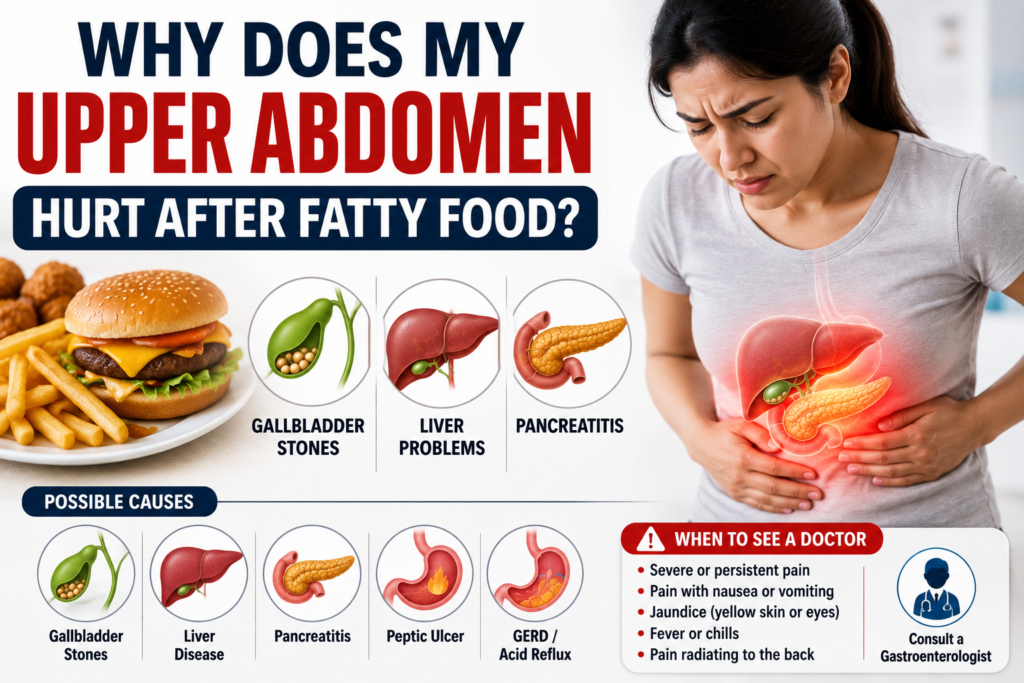
That tight, burning, or crampy discomfort right in the center of your upper abdomen after a fatty meal is one of the most common digestive complaints — and one of the most commonly dismissed. Unlike pain on the right side, which often points toward the gallbladder or liver, pain centered in the upper-mid abdomen (the epigastric region) usually has a different set of causes, closely tied to your stomach lining and how it handles fat. Here’s what’s typically behind it.
Why Fatty Food Specifically Triggers This
Fat takes longer to digest than carbohydrates or protein, which means fatty meals sit in your stomach longer and trigger a stronger release of digestive acid and bile. For a stomach lining that’s already inflamed or sensitive, this extended digestive process is often exactly what tips discomfort into noticeable pain.
Common Causes of Upper Abdominal Pain After Fatty Food
Gastritis
Inflammation of the stomach lining makes it more reactive to fatty, spicy, or acidic food. Fatty meals in particular can worsen gastritis symptoms, since they slow stomach emptying and prolong acid exposure against an already-irritated lining.
Acid Reflux (GERD)
Fatty food relaxes the valve between your stomach and food pipe, making it easier for acid to travel upward. This often shows up as burning discomfort in the upper abdomen or chest, sometimes worse when lying down after a fatty meal.
Peptic Ulcers
An ulcer in the stomach or upper intestine can cause pain that’s triggered or worsened by eating, particularly fatty or heavy meals. Our peptic ulcer treatment page covers how this condition develops and how it’s managed.
Functional Dyspepsia
Sometimes called simply “indigestion,” this involves persistent upper abdominal discomfort without a clearly identifiable structural cause on testing. Fatty food is one of the most common triggers, since it slows digestion and increases the sense of fullness and discomfort.
Delayed Stomach Emptying
When the stomach empties more slowly than normal, fatty meals — which are already slower to digest — can sit uncomfortably for longer, leading to bloating, pain, and a heavy sensation after eating.
How This Differs From Right-Side Pain
It’s worth noting that upper-mid abdominal pain isn’t the same as pain specifically on the right side, which more often points toward the gallbladder or liver. If your discomfort sits more toward the right side under your ribs rather than centrally, our guide on pain under the right rib after eating covers that specific pattern in more detail. Location matters more than people realize when it comes to narrowing down the likely cause.
Symptoms That Often Accompany This Pain
- Bloating or a feeling of fullness
- Burning sensation, particularly after eating
- Nausea
- Belching or acid taste in the mouth
- Discomfort that worsens when lying down shortly after eating
When Should You See a Gastroenterologist?
Consider getting evaluated if:
- Upper abdominal pain after fatty food happens regularly, not just occasionally
- The discomfort is severe or persists for hours after eating
- You’re relying on antacids frequently just to get through meals
- Symptoms are accompanied by unintentional weight loss or persistent nausea
- Over-the-counter remedies aren’t providing lasting relief
At Samarpan Gastro and Liver Clinic, Dr. Shekhar Puri helps patients pinpoint whether recurring upper abdominal pain stems from gastritis, reflux, an ulcer, or a broader digestive disorder, so treatment targets the actual cause rather than just managing symptoms with antacids indefinitely.
How Is the Cause Diagnosed?
- H. Pylori Testing — to check for this common cause of gastritis and ulcers
- Endoscopy — to directly examine the stomach lining, available through our endoscopy services
- Blood Tests — to check for inflammation or related markers
- Ultrasound — to rule out gallbladder or liver involvement if the pain pattern is unclear
What Helps in the Meantime?
- Eating smaller, more frequent meals rather than large fatty ones
- Avoiding lying down immediately after eating
- Limiting fried, heavily oiled, or creamy foods during flare-ups
- Eating slowly, since rushed meals often worsen digestive discomfort
These changes can ease symptoms, but they’re not a substitute for identifying and treating the underlying cause if the pain keeps recurring.
FAQs
Why does my upper stomach hurt specifically after fatty food? Fat takes longer to digest and triggers stronger acid and bile release, which can worsen discomfort in a stomach lining that’s already inflamed or sensitive due to gastritis, reflux, or an ulcer.
Is upper abdominal pain after eating always gastritis? Not always. It can also stem from acid reflux, peptic ulcers, functional dyspepsia, or delayed stomach emptying, which is why a proper evaluation helps pinpoint the exact cause.
How is upper abdominal pain different from right-side pain after eating? Upper-mid (epigastric) pain usually points toward the stomach lining, while right-side pain more often points toward the gallbladder or liver, since they’re located in different areas of the abdomen.
Can stress make this kind of pain worse? Yes, stress can increase stomach acid production and worsen gastritis or functional dyspepsia symptoms, making fatty food harder to tolerate during stressful periods.
Which doctor should I see for recurring upper abdominal pain? A gastroenterologist can evaluate whether the cause is gastritis, reflux, an ulcer, or another digestive condition, and guide you toward the right treatment.
Related Reads:
- Peptic Ulcer Treatment in Varanasi
- Why Do I Feel Pain Under My Right Rib After Eating?
- Why Do I Feel Pain on the Right Side of My Stomach After Eating?
- Digestive Disorders — Full Service Page
- Endoscopy Services in Varanasi
Recurring upper abdominal pain after fatty food? Book a consultation at Samarpan Gastro and Liver Clinic, Varanasi, and get to the root cause
