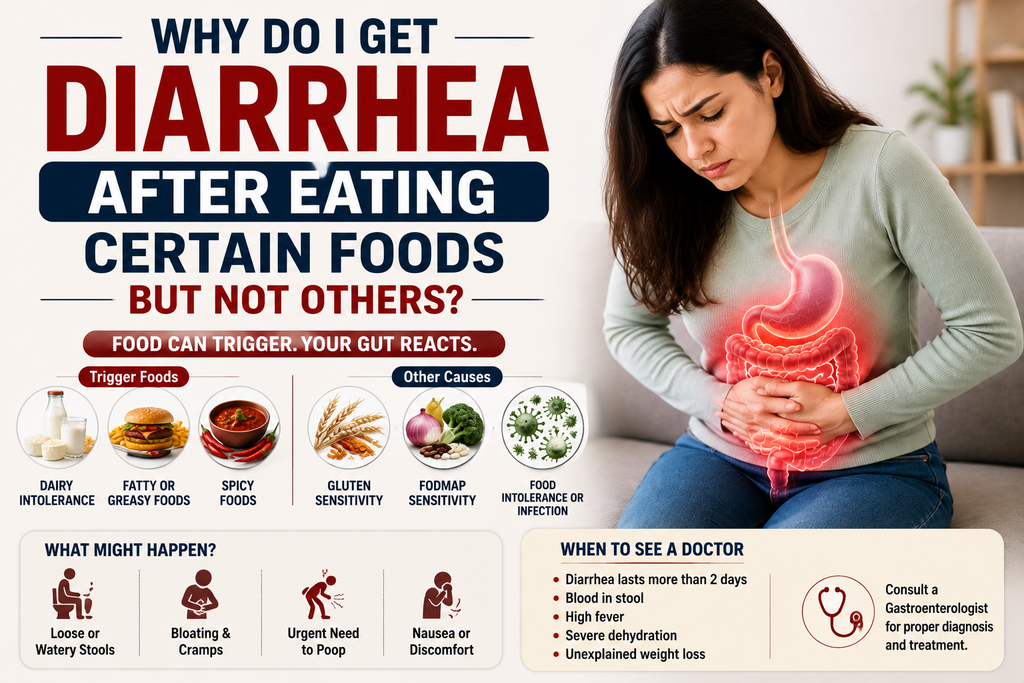
If certain foods consistently send you running to the bathroom while others sit perfectly fine, it’s not a coincidence or bad luck — your body is reacting to something specific about those particular foods. Unlike general stomach upset that can happen from almost anything, this pattern of predictable, food-specific diarrhea usually points toward an identifiable cause. Here’s what’s likely going on, and how to figure out exactly what’s triggering it.
Why Some Foods Trigger Diarrhea and Others Don’t
Diarrhea after specific foods usually comes down to your digestive system struggling with a particular component in that food — a specific sugar, protein, or type of fat — rather than a general sensitivity to food overall. This is exactly why you can tolerate most meals without issue, yet reliably react to a specific dish, ingredient, or food group every single time.
Common Causes of Food-Specific Diarrhea
Lactose Intolerance
If dairy products consistently trigger diarrhea, bloating, or cramping, while other foods don’t, lactose intolerance is one of the most common explanations. This happens when your body doesn’t produce enough of the enzyme needed to properly digest lactose, the sugar found in milk and dairy products.
Gluten Sensitivity or Celiac Disease
Diarrhea specifically after wheat, bread, or other gluten-containing foods can point toward gluten sensitivity or, in more serious cases, celiac disease — an autoimmune condition where gluten triggers damage to the intestinal lining.
High-Fat Foods and Gallbladder Function
If fatty, fried, or oily foods specifically trigger diarrhea, it can relate to how efficiently your gallbladder and pancreas manage fat digestion. This becomes more likely if you’ve had your gallbladder removed, or if you have an underlying condition affecting bile flow.
FODMAP Sensitivity
Certain carbohydrates — found in foods like onions, garlic, certain fruits, and legumes — are poorly absorbed by some people, leading to gas, bloating, and diarrhea specifically after eating these foods. This is a common trigger pattern in people with irritable bowel syndrome (IBS).
Artificial Sweeteners
Sugar substitutes like sorbitol and mannitol, commonly found in sugar-free products, can cause diarrhea in some people even in relatively small amounts, since they’re poorly absorbed by the digestive system.
Spicy Food
Capsaicin, the compound responsible for spice in chili peppers, can speed up digestion and irritate the intestinal lining in sensitive individuals, leading to diarrhea specifically after spicier meals.
Food Allergies
Less commonly, a genuine food allergy — rather than an intolerance — can cause diarrhea alongside other symptoms like hives, swelling, or difficulty breathing. This is a more serious reaction that needs prompt medical attention if it occurs.
How to Identify Your Specific Trigger
- Keep a food and symptom diary — note what you eat and when diarrhea follows, looking for a consistent pattern over a few weeks
- Try an elimination approach — under medical guidance, temporarily remove a suspected trigger food and observe whether symptoms improve
- Pay attention to timing — some triggers cause symptoms within an hour, while others take several hours, which can help narrow down the cause
- Note accompanying symptoms — bloating, gas, cramping, or skin reactions alongside diarrhea can point toward different underlying causes
When Is Food-Specific Diarrhea a Sign of Something More Serious?
While many cases relate to intolerances that can be managed with dietary adjustments, certain patterns warrant a proper evaluation:
- Diarrhea that’s become more frequent or severe over time
- Blood in your stool
- Unintentional weight loss
- Diarrhea accompanied by persistent abdominal pain
- Symptoms that don’t improve despite avoiding the suspected trigger food
- Signs of an allergic reaction, like swelling or difficulty breathing
When Should You See a Gastroenterologist?
Consider getting evaluated if:
- You’ve identified a pattern but aren’t sure of the exact cause
- Avoiding the suspected trigger food isn’t resolving your symptoms
- Diarrhea is affecting your daily life, nutrition, or energy levels
- You suspect celiac disease or a more significant digestive condition
At Samarpan Gastro and Liver Clinic, Dr. Shekhar Puri helps patients pinpoint the exact cause behind food-specific digestive reactions, whether it’s an intolerance, IBS, or another underlying digestive disorder, so you get a clear answer instead of guessing indefinitely through trial and error.
How Is the Cause Diagnosed?
- Blood Tests — to screen for celiac disease and related markers
- Hydrogen Breath Test — commonly used to diagnose lactose intolerance and certain FODMAP sensitivities
- Stool Tests — to rule out infection or malabsorption
- Endoscopy — to examine the intestinal lining directly if celiac disease or another structural cause is suspected, available through our endoscopy services
What Helps Once You Know Your Trigger?
- Avoiding or limiting the specific identified trigger food
- Gradually testing tolerance levels, since some intolerances are dose-dependent rather than all-or-nothing
- Working with your doctor on dietary substitutions to maintain proper nutrition while avoiding trigger foods
- Managing any underlying condition, like IBS or celiac disease, alongside dietary changes
FAQs
Why does dairy give me diarrhea but other foods don’t? This is a classic sign of lactose intolerance, where your body doesn’t produce enough of the enzyme needed to properly digest the sugar found in milk and dairy products.
Can spicy food alone cause diarrhea? Yes, capsaicin in spicy food can speed up digestion and irritate the intestinal lining in sensitive individuals, leading to diarrhea specifically after spicier meals.
Is food-specific diarrhea always an intolerance? Not always. It can also stem from IBS, gallbladder-related fat digestion issues, celiac disease, or occasionally a genuine food allergy, which is why identifying the exact pattern matters.
How do I figure out which food is causing my diarrhea? Keeping a food and symptom diary, along with a supervised elimination approach, is one of the most reliable ways to identify a specific trigger.
Which doctor should I see for recurring diarrhea after certain foods? A gastroenterologist can help identify whether the cause is an intolerance, IBS, or another digestive condition, and guide you toward proper testing and management.
Related Reads:
- Digestive Disorders — Full Service Page
- Endoscopy Services in Varanasi
- Why Do I Feel Sick After Eating Oily Food?
- Why Do I Feel Full Even After Eating Very Little?
Struggling to figure out which foods are triggering your diarrhea? Book a consultation at Samarpan Gastro and Liver Clinic, Varanasi, and get a clear answer.
