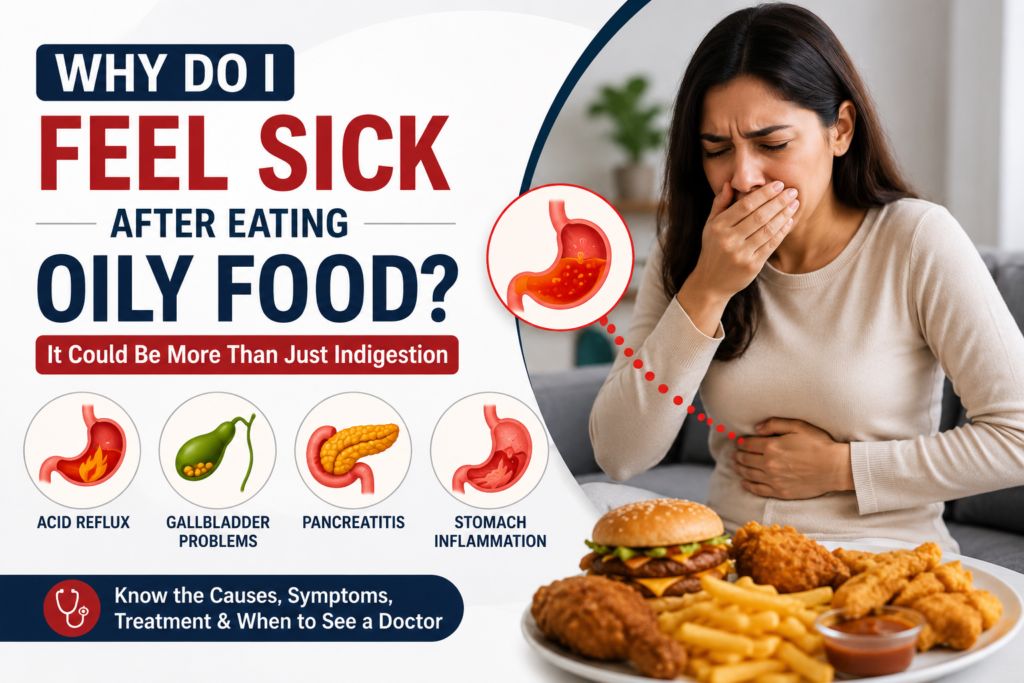
If you feel sick after eating oily food — nausea, bloating, acidity, or a heavy, sick feeling in your stomach — it’s easy to shrug it off as “just indigestion.” Most of the time, that’s exactly what it is. But when this happens often, or comes with pain, vomiting, or fatigue, it can point to something more specific: gallstones, gastritis, acid reflux (GERD), pancreatitis, or an underlying liver issue.
In this article, we’ll walk through why oily food upsets your stomach, which symptoms need urgent attention, how doctors diagnose the cause, and what actually helps — along with foods to avoid and foods that go easy on your gut.
Common Reasons You Feel Sick After Eating Oily Food
Oily and fried food is harder for your body to break down than most other food groups. Fat digestion needs a steady supply of bile from the gallbladder and enzymes from the pancreas — and when any part of that system is under strain, your body lets you know.
Indigestion The most common and least serious cause. A heavy, oily meal slows down stomach emptying, leading to bloating, fullness, and mild nausea a couple of hours after eating.
Acid Reflux (GERD) Fatty food relaxes the valve between your food pipe and stomach, allowing acid to travel back up. This causes burning in the chest, a sour taste, and nausea, especially if you lie down soon after eating. Read more about acid reflux and GERD →
Gastritis Inflammation of the stomach lining makes it more sensitive to fatty, spicy, or fried food. People with gastritis often feel a burning stomach pain along with nausea after oily meals.
Gallbladder Problems The gallbladder releases bile to digest fat. If there are gallstones or the gallbladder isn’t functioning well, fatty food can trigger sharp pain in the upper right abdomen, along with nausea and vomiting — often within 30 minutes to a few hours of eating. This falls under the broader category of digestive disorders we treat at the clinic.
Pancreatitis The pancreas produces enzymes for fat digestion. When it’s inflamed, fatty meals can cause intense upper abdominal pain that may spread to the back, along with vomiting. This needs prompt medical attention — read more about pancreatitis treatment →
Food Intolerance Some people simply have a lower tolerance for fat or specific oils, leading to bloating, cramping, or loose motions without any underlying disease.
Symptoms You Should Never Ignore
Occasional discomfort after a heavy meal is common. But certain symptoms are your body’s way of signaling something more serious:
- Severe or persistent stomach pain
- Repeated vomiting
- Fever along with abdominal pain
- Yellowing of the eyes or skin (jaundice)
- Blood in vomit
- Black or tarry stool
If you notice any of these, don’t wait it out — get evaluated as soon as possible.
When Should You See a Gastroenterologist?
If digestive problems after oily food happen only once in a while, dietary changes are usually enough. But you should consult a gastroenterologist if:
- Nausea, vomiting, or stomach pain after oily food happens frequently, not just occasionally
- The pain is sharp, severe, or located in the upper right side of your abdomen
- You’ve noticed unexplained weight loss, fatigue, or loss of appetite
- Symptoms are starting to affect your daily routine, work, or sleep
At Samarpan Gastro and Liver Clinic, we help patients get to the actual cause — rather than just treating the symptom — so the problem doesn’t keep coming back. If oily food consistently makes you sick, it’s worth getting checked rather than adjusting your diet around it indefinitely.
How Is the Cause Diagnosed?
A gastroenterologist typically narrows down the cause using a combination of:
- Blood Tests – to check for infection, inflammation, liver function, and pancreatic enzyme levels
- Ultrasound – to look for gallstones, fatty liver, or gallbladder inflammation
- Endoscopy – to examine the food pipe, stomach, and upper intestine for gastritis, ulcers, or reflux damage
- CT Scan (if needed) – for a more detailed look, especially if pancreatitis or a complication is suspected
The right combination depends on your symptoms and history, so your doctor will usually start with the simplest, least invasive test first.
Treatment
Treatment depends entirely on the underlying cause:
- Lifestyle changes — smaller meals, eating slowly, avoiding lying down right after eating, and cutting down on fried and fatty food
- Medicines — antacids, acid reducers, or digestive enzyme support, depending on the diagnosis
- Procedures — in cases like gallstones or advanced GERD, a procedure or minor surgery may be recommended
Self-medicating for recurring symptoms often masks the real problem. A proper diagnosis makes sure the treatment actually matches the cause.
Foods to Avoid
If oily food keeps triggering discomfort, these are worth cutting back on:
- Fried food
- Fast food
- Cheese
- Cream
- Alcohol
- Sugary drinks
Foods That Are Easier to Digest
While your digestive system settles, lean on lighter, easily digestible options:
- Khichdi
- Rice
- Banana
- Curd
- Coconut water
- Oats
FAQs
Is it normal to feel sick after eating oily food? Occasionally, yes — oily food is harder to digest and can cause mild nausea or bloating. But if it happens regularly, it’s worth looking into the underlying cause rather than treating it as normal.
Can oily food cause vomiting? Yes. Oily food can trigger vomiting, especially if there’s an underlying issue like gallstones, gastritis, or pancreatitis. Occasional vomiting after a very heavy meal can also happen without any disease.
Does fatty liver cause nausea after meals? Fatty liver itself often has no symptoms in the early stages, but as it progresses, some people report nausea, fatigue, or discomfort after fatty meals. A liver function test and ultrasound can confirm this.
Can gallbladder stones make oily food difficult to digest? Yes. Since the gallbladder releases bile to break down fat, gallstones can block or reduce this process, leading to pain and nausea specifically after oily or fried meals.
Which doctor should I consult? A gastroenterologist is the right specialist for digestive symptoms related to oily food, including issues with the stomach, gallbladder, pancreas, and liver.
Related Reads:
- Fatty Liver Symptoms You Should Never Ignore
- Pancreatitis Treatment in Varanasi
- Why Does Food Come Back Into My Mouth After Eating? Is It Acid Reflux or GERD?
- How Do You Know If Your Acidity Is Becoming Serious? 7 Warning Signs
- Endoscopy in Varanasi: When Is It Needed?
- Digestive Disorders — Full Service Page
Experiencing frequent discomfort after meals? Book a consultation at Samarpan Gastro and Liver Clinic, Varanasi, and get to the root cause.
