Most people with fatty liver disease do not know they have it. In India, it is one of the most common — and most underdiagnosed — liver conditions today. The liver rarely complains loudly. Instead, it sends quiet, easy-to-miss signals while it quietly struggles under the weight of excess fat.
That is exactly what makes fatty liver symptoms so dangerous. By the time most people seek help, the condition has already progressed further than it needed to.
So what are the signs? Who is most at risk? And when is the right time to see a doctor?
What Is Fatty Liver Disease?
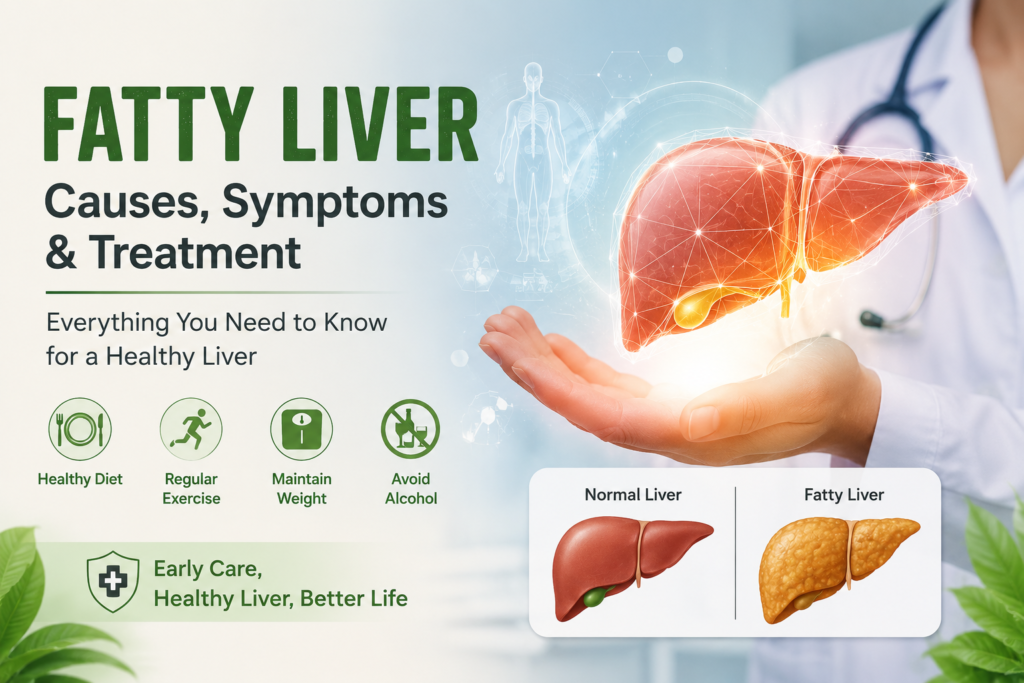
Fatty liver disease occurs when excess fat builds up inside liver cells, reducing the liver’s ability to function properly. It can develop due to poor diet, obesity, Type 2 diabetes, high cholesterol, or excessive alcohol consumption.
What makes it particularly concerning is that it produces little to no noticeable symptoms in its early stages. While you go about your daily life feeling relatively fine, your liver may already be under significant stress.
8 Fatty Liver Symptoms You Should Never Ignore
1. Persistent Fatigue With No Clear Cause
This is not the kind of tiredness that a good night’s sleep fixes. Fatty liver-related fatigue is deep, persistent, and present even after adequate rest. When the liver is under stress, the body’s ability to process and convert energy is impaired — and you feel it every single day.
If you have been feeling chronically drained without an obvious reason, this is worth investigating.
2. Dull Pain or Heaviness in the Upper Right Abdomen
Your liver sits just beneath your right rib cage. When it becomes inflamed or swollen due to fat accumulation, you may feel a persistent dull ache or a sense of pressure in that area. Most people dismiss this as gas, muscle strain, or indigestion.
However, ongoing discomfort in the upper right abdomen — especially combined with other symptoms on this list — is a clear reason to get checked.
3. Unexplained Weight Gain, Especially Around the Stomach
A stressed liver struggles to regulate blood sugar and metabolise fat efficiently. This often leads to gradual, unexplained weight gain — particularly around the abdomen — even when your diet has not significantly changed.
If you are gaining weight around the stomach without a clear lifestyle reason, the liver may be a contributing factor.
4. Bloating, Nausea, and Digestive Discomfort
Fatty liver frequently disrupts normal digestion. Bloating after meals, a persistent low-grade nausea, or general stomach discomfort that does not seem to go away are all commonly associated with poor liver function.
These symptoms are easy to attribute to acidity or food intolerance — but if they keep returning, the liver should be ruled out as a cause.
5. Loss of Appetite
Feeling full after just a few bites — or simply not feeling hungry — can be a subtle sign that the liver is not functioning as it should. When liver function is impaired, the body’s normal appetite signals can be disrupted in ways that are easy to overlook.
6. Yellowing of the Skin or Eyes (Jaundice)
This is a serious warning sign that should never be ignored. Yellowing of the skin or the whites of the eyes — known as jaundice — indicates that bilirubin is building up in the blood because the liver can no longer process it properly.
If you notice any yellowish tint in your skin or eyes, see a doctor immediately. This level of liver stress requires urgent evaluation.
7. Swelling in the Legs or Ankles
As fatty liver progresses to more advanced stages such as liver cirrhosis, the liver loses its ability to produce essential proteins. As a result, fluid accumulates in the body — often first appearing as visible swelling in the ankles or lower legs.
This is a sign that the liver disease has moved beyond the early stage and needs immediate medical attention.
8. Dark Urine or Pale-Coloured Stools
Changes in urine or stool colour are among the least-noticed fatty liver symptoms — but they are important. Tea-coloured or very dark urine, and clay-coloured or pale stools, can indicate a disruption in the liver’s bile flow.
If you notice either of these changes consistently, mention them to your doctor without delay.
Who Is Most at Risk of Fatty Liver Disease?
Fatty liver is no longer a condition that affects only heavy drinkers or elderly patients. Young adults and even teenagers are increasingly being diagnosed with it. You are at higher risk if you:
- Are overweight or carry excess fat around the abdomen
- Have Type 2 diabetes or high blood sugar
- Have high cholesterol or elevated triglycerides
- Lead a largely sedentary lifestyle
- Regularly consume sugary, oily, or processed foods
- Drink alcohol regularly
- Have a family history of liver disease
The concern is that many people with several of these risk factors feel perfectly fine — until they don’t. Annual screening is the only reliable way to catch it before symptoms worsen.
The Good News — Fatty Liver Can Be Reversed
If detected early, fatty liver disease is completely reversible. The liver is one of the very few organs in the human body that can genuinely heal and regenerate itself — but only when given the right conditions and prompt action.
Even modest lifestyle changes — eating healthier, managing blood sugar, reducing alcohol intake, and losing a small amount of weight — can lead to significant improvement in liver function within just a few months. However, none of this is possible without a proper diagnosis first.
When Should You See a Doctor?
You do not need to wait for a serious crisis. If you have been experiencing persistent fatigue, discomfort in the upper right abdomen, unexplained weight gain, or if several of the risk factors above apply to you — it is time to get tested.
A simple Liver Function Test (LFT) and an abdominal ultrasound can reveal a great deal about your liver’s current health. In some cases, an endoscopy or additional tests may be recommended to rule out complications. It is also worth noting that fatty liver can sometimes overlap with hepatitis — which makes early professional evaluation even more important.
According to the World Health Organization, liver disease is a leading cause of death globally, and early detection remains the most effective way to prevent serious outcomes.
Consult Dr. Shekhar Puri — Varanasi’s Leading Liver Specialist
Your liver works silently for you every single day. It deserves the same attention in return.
If you are concerned about any of the fatty liver symptoms listed above, or if you carry any of the risk factors mentioned, do not wait for things to get worse. Early assessment makes all the difference.
Dr. Shekhar Puri at Samarpan Gastro and Liver Clinic, Varanasi is one of the most experienced gastroenterologists and liver specialists in the region. The clinic provides expert diagnosis and treatment for fatty liver, jaundice, liver cirrhosis, pancreatitis, digestive disorders, and more — using advanced diagnostic tools and compassionate, patient-centred care.
Book your appointment today — because those small, easy-to-ignore signs are worth taking seriously before they become something harder to treat.
