
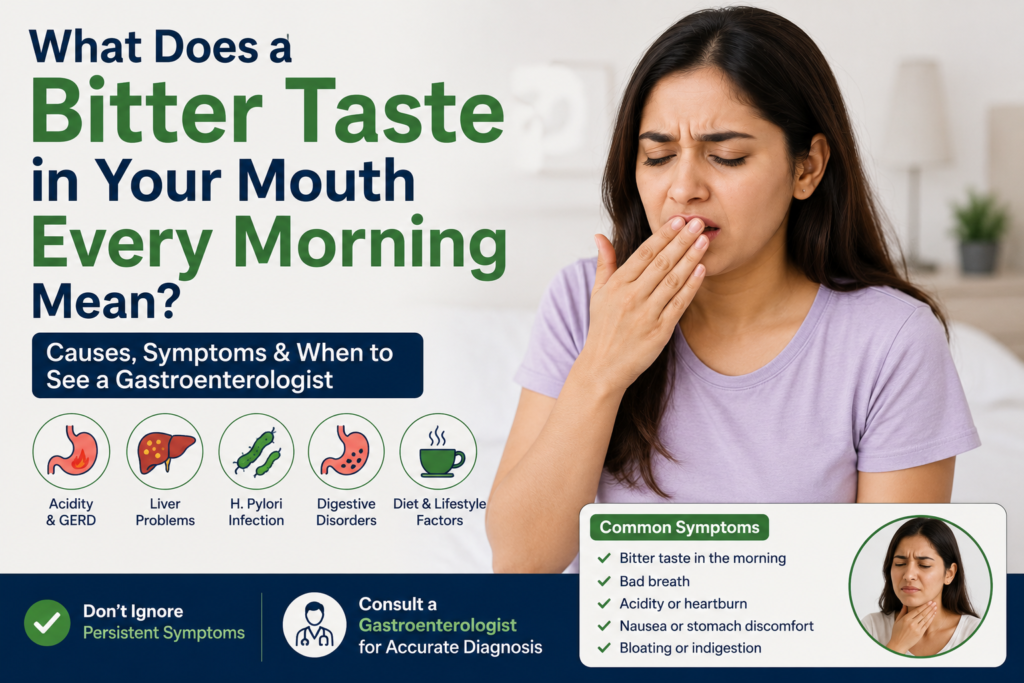
You wake up every morning with a bitter, metallic, or sour taste in your mouth. You brush your teeth. The taste returns. You drink water. It persists.
A bitter taste in your mouth every morning is one of those symptoms most people dismiss as a minor inconvenience. However, when it happens consistently – day after day – it is your digestive system communicating something specific.
This guide explains the real causes of morning bitter taste, which digestive conditions produce it, what symptoms accompany it, and exactly when to see a gastroenterologist.
A bitter taste in the mouth every morning is most commonly caused by acid reflux (GERD), bile reflux, or poor oral hygiene. However, when it occurs daily alongside digestive symptoms – bloating, nausea, or heartburn – it often indicates an underlying gastroenterological condition requiring proper evaluation. Patients experiencing persistent digestive symptoms can consult a gastroenterologist for proper evaluation and treatment.
What Causes a Bitter Taste in Your Mouth?
Taste perception depends on the tongue, saliva, and the substances present in the mouth and throat. When acid, bile, or other digestive fluids travel upward during sleep – they reach the mouth and produce a bitter or sour taste by morning.
Moreover, the horizontal position of sleep makes this upward travel significantly easier than during the day. Consequently, people with digestive conditions causing reflux almost always notice their symptoms are worst immediately after waking.
Why Morning Is the Worst Time
Your stomach produces acid continuously – including overnight. Furthermore, during sleep, the normal swallowing reflex that clears the oesophagus decreases significantly. Consequently, refluxed acid or bile sits in the oesophagus and throat for longer overnight – intensifying the bitter taste you notice every morning.
Symptoms Checklist – Does This Sound Like You?
Check the symptoms that apply to your experience:
☐ Bitter or sour taste in mouth immediately after waking
☐ The taste persists even after brushing teeth
☐ Heartburn or chest burning – especially at night
☐ Nausea in the morning without an obvious cause
☐ Bloating or heaviness after meals the previous evening
☐ A feeling of something rising into the throat during sleep
☐ Hoarseness or mild sore throat in the morning
☐ Bad breath that does not resolve with brushing
☐ Belching or burping frequently throughout the day
☐ Waking up at night with a burning or acid sensation
If you checked 3 or more: Your symptoms suggest an underlying digestive condition – not simply oral hygiene or temporary dietary factors. Furthermore, seeing a gastroenterologist for proper evaluation is strongly recommended.
7 Common Causes of Bitter Taste in Mouth Every Morning
1. GERD – Acid Reflux During Sleep
GERD is the most common cause of a persistent bitter taste in the mouth every morning. During sleep, stomach acid escapes upward into the oesophagus and sometimes reaches the throat and mouth.
Moreover, this reflux is often silent – producing no heartburn sensation, only the bitter taste on waking. Consequently, many patients with nighttime GERD remain unaware they have the condition until other symptoms develop alongside the taste.
What Worsens GERD Overnight
Eating within two to three hours of sleep significantly worsens nighttime reflux. Furthermore, alcohol, spicy food, fatty meals, and large dinner portions all relax the lower oesophageal sphincter – allowing more acid to escape while sleeping.
2. Bile Reflux – Different From Acid Reflux
Bile is produced by the liver and stored in the gallbladder. It normally travels into the small intestine to aid digestion. However, in bile reflux, bile travels in the wrong direction – upward into the stomach and sometimes into the oesophagus and throat.
Moreover, bile produces a distinctly bitter taste – more intensely bitter than the sour taste of acid alone. Furthermore, bile reflux can occur alongside GERD or independently – and requires different treatment from acid reflux alone.
How to Distinguish Bile Reflux From Acid Reflux
Bile reflux produces a strongly bitter rather than sour taste. Moreover, it frequently causes upper abdominal pain, nausea, and sometimes vomiting of greenish-yellow bile. Consequently, anyone experiencing a distinctly bitter – rather than sour or acidic – morning taste should specifically mention bile reflux when consulting a gastroenterologist.
3. Liver or Gallbladder Problems
The liver and gallbladder both directly influence bile production and flow. When either organ is under stress – from fatty liver, gallstones, or liver inflammation – bile composition and flow patterns can change significantly.
Moreover, altered bile chemistry produces a persistent bitter taste that is particularly noticeable overnight and in the morning. Furthermore, liver conditions rarely produce obvious symptoms in their early stages – making this morning taste an important early signal worth investigating.
4. Dry Mouth and Reduced Saliva Overnight
Saliva naturally neutralises acid and washes the mouth clean throughout the day. However, during sleep, saliva production decreases significantly – reducing this protective effect.
Moreover, mouth breathing during sleep worsens dryness further. Consequently, any acid or bile that reaches the mouth during sleep remains there – becoming progressively more concentrated and bitter through the night without saliva to dilute it.
5. H. Pylori Bacterial Infection
H. pylori bacteria infect the stomach lining and increase acid production significantly. Moreover, this excess acid contributes directly to the reflux and bitter taste experienced on waking.
Furthermore, H. pylori infection is extremely common in India – affecting a large proportion of the adult population through contaminated water and food. Consequently, persistent morning bitter taste alongside bloating, nausea, or upper abdominal discomfort should always prompt H. pylori screening.
6. Medications
Several commonly prescribed medications produce a bitter taste as a direct side effect. These include:
- Antibiotics – particularly metronidazole and clarithromycin
- Certain blood pressure medications – ACE inhibitors
- Antidepressants and mood stabilisers
- Zinc supplements – commonly used in India during illness
- Multivitamins – particularly those containing iron or zinc
Moreover, medication-related bitter taste typically begins shortly after starting the medication and resolves when it is stopped or changed. Consequently, any new bitter taste following the start of a new medication should be discussed with your prescribing doctor promptly.
7. Poor Oral Hygiene and Dental Issues
Bacteria accumulated on the tongue, teeth, and gums overnight produce compounds that cause a bitter or metallic taste by morning. Moreover, gum disease, tooth decay, and dental infections significantly worsen this effect.
Furthermore, a white or yellowish coating on the tongue – very common in Indians – traps bacteria and food particles that intensify the bitter taste throughout the day. Consequently, a thorough tongue-cleaning routine alongside brushing often reduces morning bitterness from purely oral causes.
Myth vs Fact — Bitter Taste in Mouth
| 🔴 Myth | 🟢 Fact |
|---|---|
| “It is just bad morning breath — brushing will fix it” | Brushing helps oral causes, but digestive causes return the taste immediately |
| “Bitter taste always means liver disease” | Most cases are from GERD or bile reflux – not serious liver disease |
| “Drinking water first thing clears it completely” | Water temporarily dilutes the taste but does not treat the underlying cause |
| “It is caused by eating spicy food the night before” | Spicy food worsens reflux but is rarely the sole cause of daily morning bitterness |
| “Only older people get this” | GERD and bile reflux increasingly affect young Indians in their 20s and 30s |
| “Antacids fix bitter taste permanently” | Antacids mask symptoms temporarily — they do not treat underlying bile reflux or H. pylori |
People Also Ask
Why do I wake up with a bitter taste every morning?
Morning bitter taste most commonly results from acid or bile refluxing into the throat and mouth during sleep. The horizontal sleeping position makes this upward flow easier. Furthermore, reduced saliva overnight means the bitter substance remains in the mouth – producing the taste you notice immediately on waking.
Can fatty liver cause a bitter taste in the mouth?
Yes – fatty liver and other liver conditions alter bile composition and flow. Furthermore, bile that reaches the stomach and oesophagus produces a distinctly bitter taste. Patients experiencing persistent bitter taste alongside fatigue, upper right abdominal discomfort, or bloating should request liver function testing alongside a digestive evaluation.
Is a bitter taste in the mouth every morning serious?
Not always – but persistent daily bitterness always warrants investigation. Most causes are treatable digestive conditions like GERD, bile reflux, or H. pylori infection. However, it can occasionally indicate liver or gallbladder problems that benefit significantly from early detection and treatment.
What is the difference between bitter and sour taste from reflux?
Acid reflux produces a sour, acidic taste. Bile reflux produces a distinctly bitter taste – often described as more intensely unpleasant than simple acid. Understanding which taste you experience helps your gastroenterologist identify whether acid or bile reflux is the primary cause.
Does H. pylori cause bitter taste in mouth?
Yes. H. pylori infection increases stomach acid production and causes gastritis – both contributing to reflux and the associated bitter taste. A breath test or stool test detects H. pylori easily, and a short antibiotic course treats it effectively in most patients.
When Should You See a Gastroenterologist?
Most people endure morning bitter taste for months before seeking help. However, early evaluation leads to faster, more effective treatment.
See a gastroenterologist promptly if your bitter taste:
- Occurs every morning regardless of what you ate the night before
- Persists after brushing and continues throughout the morning
- Is accompanied by heartburn, nausea, or upper abdominal discomfort
- Comes alongside bloating, loss of appetite, or unexplained weight loss
- Has worsened progressively over recent weeks
- Is accompanied by hoarseness, chronic sore throat, or difficulty swallowing
- Occurs alongside yellowing of skin or eyes – indicating possible liver involvement
Furthermore, patients experiencing persistent digestive symptoms can consult a gastroenterologist for proper evaluation and treatment rather than continuing indefinite self-management with antacids.
FAQs
What does a bitter taste in the mouth every morning mean?
A bitter taste in the mouth every morning most commonly indicates acid reflux, bile reflux, or H. pylori infection causing digestive fluids to travel upward during sleep. It can also result from liver or gallbladder conditions, certain medications, or poor oral hygiene. Persistent daily occurrence warrants gastroenterologist evaluation.
How do I get rid of bitter taste in my mouth in the morning?
Address the underlying cause. Avoid eating within three hours of sleep, elevate the head of your bed, avoid alcohol and spicy meals at dinner, and stay hydrated. However, these measures manage symptoms – they do not treat GERD, bile reflux, or H. pylori. A gastroenterologist identifies and treats the root cause effectively.
Can stress cause bitter taste in mouth?
Yes. Stress increases stomach acid production and can worsen reflux through the gut-brain axis. Moreover, stress-related dry mouth reduces the saliva that normally neutralises acid – compounding the bitter taste further.
What tests diagnose the cause of bitter taste in mouth?
Relevant tests include H. pylori breath or stool test, upper GI endoscopy, liver function test, abdominal ultrasound, and 24-hour pH monitoring. A gastroenterologist selects the appropriate tests based on accompanying symptoms and clinical examination.
Is bitter taste in mouth a sign of diabetes?
Diabetes can alter taste perception – particularly when blood sugar is poorly controlled. Furthermore, diabetic patients are at higher risk of GERD and gastroparesis, both of which cause morning bitter taste. Patients with diabetes experiencing this symptom should mention it to both their physician and gastroenterologist.
Consult Dr. Shekhar Puri – Varanasi’s Trusted Gastroenterologist
A bitter taste in the mouth every morning is not something you should accept as normal. It is a consistent signal from your digestive system – and it deserves a proper answer.
Most causes of morning bitter taste are highly treatable when identified correctly. Moreover, early evaluation prevents conditions like GERD and bile reflux from progressing to oesophageal damage that requires more complex treatment.
Dr. Shekhar Puri at Samarpan Gastro and Liver Clinic, Varanasi specialises in diagnosing and treating GERD, bile reflux, H. pylori infection, fatty liver, gallbladder conditions, and the complete range of digestive disorders. With advanced endoscopy, H. pylori testing, and comprehensive liver assessment available under one roof, Dr. Puri provides clear diagnosis and effective, personalised treatment.
Patients experiencing persistent digestive symptoms can consult a gastroenterologist for proper evaluation and treatment — and the earlier you seek this, the simpler and more effective the solution will be.
Book your appointment today via WhatsApp – because a daily bitter taste deserves a real answer, not another antacid.
According to the Indian Society of Gastroenterology, GERD and bile reflux are among the most commonly underdiagnosed digestive conditions in India — with morning symptoms like bitter taste frequently dismissed for months before appropriate specialist evaluation is sought.
⚠️ Medical Disclaimer: This blog is for general informational purposes only and does not constitute medical advice. Always consult a qualified doctor for diagnosis and personalised treatment.
