
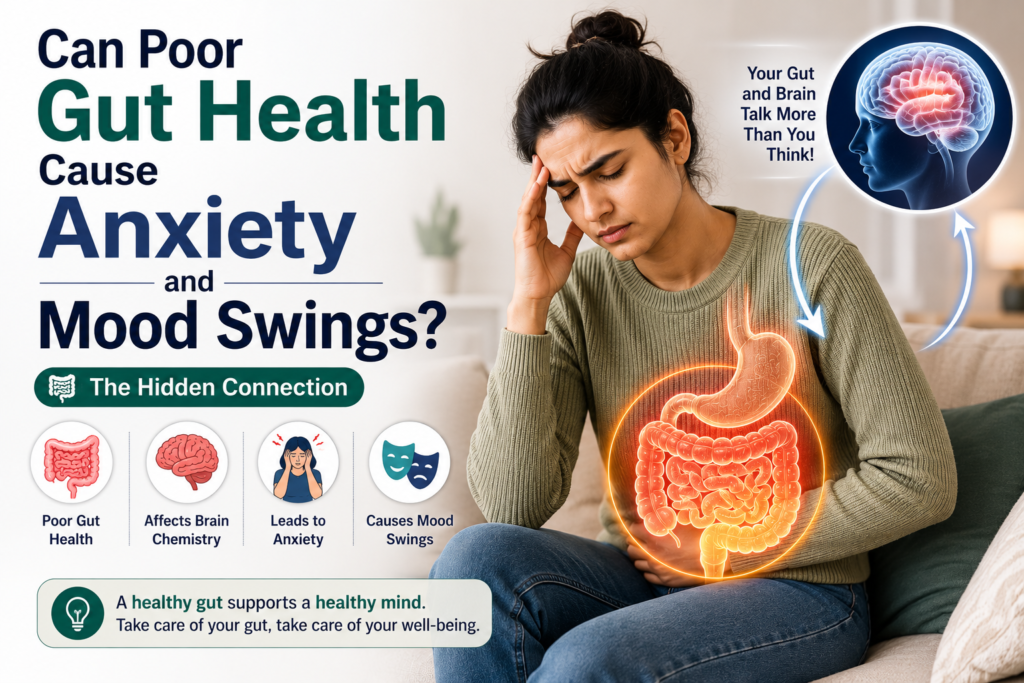
You feel anxious without any obvious reason. Your mood shifts unpredictably throughout the day. You also struggle with bloating, irregular digestion, or persistent stomach discomfort.
Most people treat these as separate problems. However, they are often deeply connected. Poor gut health can absolutely cause anxiety and mood swings — and the science behind this connection is now well-established.
This guide explains how your gut and brain communicate, why gut health directly affects your mental state, and what you can do about it.
The Gut-Brain Connection — What Science Says
Your gut and brain maintain a constant, two-way communication system. Scientists call this the gut-brain axis. Moreover, this connection runs through the vagus nerve — one of the longest nerves in the human body — linking the digestive system directly to the brain.
Why the Gut Is Called the Second Brain
Your gut contains over 500 million neurons. Furthermore, it produces more than 90 percent of the body’s serotonin — the neurotransmitter most closely associated with mood regulation, happiness, and emotional stability.
This means your digestive system does not just digest food. It actively produces the chemicals your brain uses to regulate emotions. Consequently, when your gut health deteriorates, serotonin production drops — and your mood suffers directly as a result.
Additionally, the gut produces significant amounts of dopamine, GABA, and other mood-regulating neurotransmitters. Poor gut health disrupts all of them simultaneously.
How Poor Gut Health Triggers Anxiety and Mood Swings
1. Dysbiosis — An Imbalanced Gut Microbiome
Your gut contains trillions of bacteria, fungi, and other microorganisms. Together, these form your gut microbiome. A healthy microbiome maintains a careful balance between beneficial and harmful bacteria.
Dysbiosis occurs when this balance shifts — with harmful bacteria outnumbering beneficial ones. Moreover, dysbiosis directly reduces serotonin production. It also increases inflammatory compounds called cytokines that travel to the brain and disrupt mood regulation.
How Dysbiosis Develops in Indians
Poor dietary habits accelerate dysbiosis significantly. Ultra-processed foods, refined carbohydrates, excess sugar, and low fibre intake all deplete beneficial gut bacteria rapidly. Furthermore, chronic stress, overuse of antibiotics, and irregular sleep patterns compound the damage over time.
Consequently, many young Indians experiencing unexplained anxiety or mood instability have an underlying gut microbiome imbalance driving their symptoms — without ever connecting the two.
2. Chronic Gut Inflammation
Inflammation in the gut does not stay confined to the digestive tract. It travels. Inflammatory molecules — particularly cytokines — cross the blood-brain barrier and directly affect brain function.
Moreover, chronic gut inflammation increases cortisol production. Elevated cortisol is the body’s primary stress hormone. High cortisol levels produce anxiety, irritability, poor concentration, and emotional reactivity — all without any direct psychological trigger.
The Inflammation-Mood Cycle
Gut inflammation triggers anxiety. Anxiety worsens gut inflammation. This cycle feeds itself relentlessly unless someone interrupts it at the gut level. Additionally, chronic inflammation contributes to depression in ways that no purely psychological intervention can fully address.
Therefore, treating gut inflammation often produces dramatic improvements in mood and anxiety — even when the person initially presents with what appears to be a purely mental health problem.
3. Leaky Gut Syndrome
The gut lining acts as a selective barrier. It allows nutrients to pass into the bloodstream while keeping harmful substances out. However, inflammation and poor diet can damage this lining — creating microscopic gaps.
These gaps allow bacterial toxins, undigested food particles, and inflammatory compounds to enter the bloodstream directly. Furthermore, the immune system responds to these intruders aggressively — producing widespread inflammation that affects the brain alongside every other organ.
Signs That Leaky Gut May Be Affecting Your Mood
People with leaky gut frequently report a specific combination of symptoms. They experience digestive issues — bloating, irregular motions, food sensitivities — alongside persistent low mood, brain fog, and anxiety. Moreover, they often find that their digestive and psychological symptoms worsen simultaneously during periods of stress.
This pattern is a strong clinical indicator that gut-brain axis disruption — rather than a purely psychological condition — is driving their mood instability.
4. Serotonin Disruption
Over 90 percent of the body’s serotonin originates in the gut — not the brain. The gut’s enterochromaffin cells produce and store this serotonin. They release it in response to food, movement, and gut microbiome signals.
Poor gut health reduces enterochromaffin cell function significantly. Consequently, serotonin availability drops — producing low mood, heightened anxiety, poor sleep, and emotional volatility. Additionally, low gut serotonin affects gut motility itself — worsening symptoms like IBS and further disrupting the gut-brain axis.
Why Antidepressants Alone Are Not Enough
Many patients with gut-driven mood disorders receive antidepressants that target brain serotonin. However, these medications cannot restore gut serotonin production. Furthermore, they do not address the underlying gut dysfunction driving the deficiency.
Treating the gut alongside any psychological intervention produces significantly better outcomes for these patients. This is increasingly recognised by gastroenterologists and psychiatrists working together on complex cases.
5. Irritable Bowel Syndrome and Anxiety
IBS and anxiety disorders co-occur at remarkably high rates. Research consistently shows that 50 to 90 percent of IBS patients also experience clinically significant anxiety or depression.
This relationship runs in both directions. Anxiety worsens gut motility and pain sensitivity — making IBS symptoms more intense. Simultaneously, IBS disrupts gut serotonin and vagal nerve signalling — directly worsening anxiety.
Managing IBS and Anxiety Together
Treating IBS and anxiety separately produces limited results for most patients. Moreover, patients who receive integrated treatment — addressing gut health and mental wellbeing simultaneously — report significantly better outcomes than those treated for either condition alone.
A gastroenterologist experienced in the gut-brain axis plays a critical role in this integrated approach. They identify the digestive root of the problem and treat it directly — creating the biological conditions in which psychological recovery becomes possible.
Signs That Your Gut Is Affecting Your Mood
Recognising the connection in your own experience is the first step. Watch for this combination of symptoms:
- Anxiety or low mood that worsens alongside digestive flare-ups
- Brain fog or difficulty concentrating after meals
- Mood instability accompanied by bloating or irregular bowel habits
- Increased anxiety during periods of dietary change or gut stress
- Persistent low mood despite adequate sleep and no clear psychological triggers
- Food sensitivities that appear alongside anxiety episodes
Furthermore, if your mental health symptoms began around the same time as a significant change in your digestive health — a course of antibiotics, a gut infection, or a major dietary shift — the gut-brain connection is a very likely contributing factor.
What Improves Gut Health and Mood Together
Dietary Changes That Help Most
Increasing fibre intake feeds beneficial gut bacteria directly. Fermented foods — curd, idli, dosa, kanji — introduce beneficial bacteria into the gut. Reducing ultra-processed food, refined sugar, and excess refined carbohydrates allows the microbiome to rebalance.
Moreover, staying well hydrated supports gut motility and mucosal health — both of which affect serotonin production. Additionally, eating at regular times rather than skipping meals stabilises the gut environment significantly.
Lifestyle Changes That Support the Gut-Brain Axis
Regular moderate exercise — even 30 minutes of walking daily — improves gut microbiome diversity significantly. Furthermore, consistent sleep reduces cortisol, supports gut repair, and stabilises mood.
Managing chronic stress through any sustainable practice — exercise, breathing techniques, or structured relaxation — directly reduces gut inflammation. Consequently, both digestive symptoms and mood instability improve together.
When to See a Gastroenterologist
See a specialist if you experience persistent bloating, irregular bowel habits, stomach pain, or digestive discomfort alongside unexplained anxiety or mood instability. Furthermore, consult a gastroenterologist if:
- Your digestive and mood symptoms consistently worsen together
- Antidepressants or anxiety medication have provided limited relief
- You have a diagnosed anxiety disorder but also struggle with IBS or chronic gut issues
- Your symptoms began after a gut infection, antibiotic course, or major dietary change
- Food sensitivities are worsening alongside mood instability
A gastroenterologist evaluates the gut-brain axis from the digestive end — identifying and treating the physical root of the problem. This often unlocks improvement that purely psychological treatment could not achieve alone.
Frequently Asked Questions
Can poor gut health cause anxiety and mood swings? Yes — directly. The gut produces over 90 percent of the body’s serotonin. Poor gut health reduces serotonin production, increases inflammatory cytokines that affect brain function, and disrupts the vagal nerve signals that regulate emotional stability. Consequently, digestive dysfunction frequently manifests as anxiety, mood swings, irritability, and depression.
What is the gut-brain axis? The gut-brain axis is the two-way communication system linking the digestive tract and the brain through the vagus nerve, the enteric nervous system, the immune system, and the gut microbiome. It allows the gut to influence mood, stress response, and cognitive function — and allows the brain to influence gut motility, inflammation, and pain sensitivity.
Does IBS cause anxiety? Yes — IBS and anxiety disorders co-occur in 50 to 90 percent of cases. IBS disrupts gut serotonin production and vagal nerve signalling — directly worsening anxiety. Simultaneously, anxiety worsens gut pain sensitivity and motility — intensifying IBS symptoms. Treating both conditions together produces significantly better outcomes than treating either one in isolation.
How do I know if my anxiety is gut-related? Key indicators include mood symptoms that worsen alongside digestive flare-ups, brain fog after meals, anxiety episodes linked to food sensitivities, and mental health symptoms that began after a gut infection or antibiotic course. A gastroenterologist can evaluate the gut-brain connection through targeted digestive assessment.
Which doctor should I see for gut-related anxiety in Varanasi? A gastroenterologist with experience in the gut-brain axis is the right specialist. Dr. Shekhar Puri at Samarpan Gastro and Liver Clinic, Varanasi, diagnoses and treats the full range of digestive conditions — including IBS, gut dysbiosis, chronic gut inflammation, and leaky gut — that contribute to mood disorders and anxiety.
Consult Dr. Shekhar Puri — Varanasi’s Trusted Gastroenterologist
Your gut and your mood are not separate systems. They communicate constantly — and when the gut struggles, the mind feels it.
If you experience persistent digestive symptoms alongside unexplained anxiety, mood instability, or emotional volatility — the answer may lie in your gut rather than your mind alone. Getting a proper digestive evaluation is the logical first step.
Dr. Shekhar Puri at Samarpan Gastro and Liver Clinic, Varanasi specialises in diagnosing and treating the complete range of gut conditions — from IBS and gut dysbiosis to chronic inflammation, GERD, fatty liver, and gut motility disorders. With advanced diagnostic tools and a genuinely patient-centred approach, Dr. Puri provides clear answers and effective treatment plans.
Book your appointment today via WhatsApp — because your gut deserves the same attention as your mind.
According to the Indian Society of Gastroenterology, the gut-brain axis is an increasingly recognised area of clinical importance — with digestive dysfunction playing a direct and measurable role in anxiety, depression, and mood disorders across the Indian population.
⚠️ Medical Disclaimer: This blog is for general informational purposes only and does not constitute medical advice. Always consult a qualified doctor for diagnosis and personalised treatment.
