
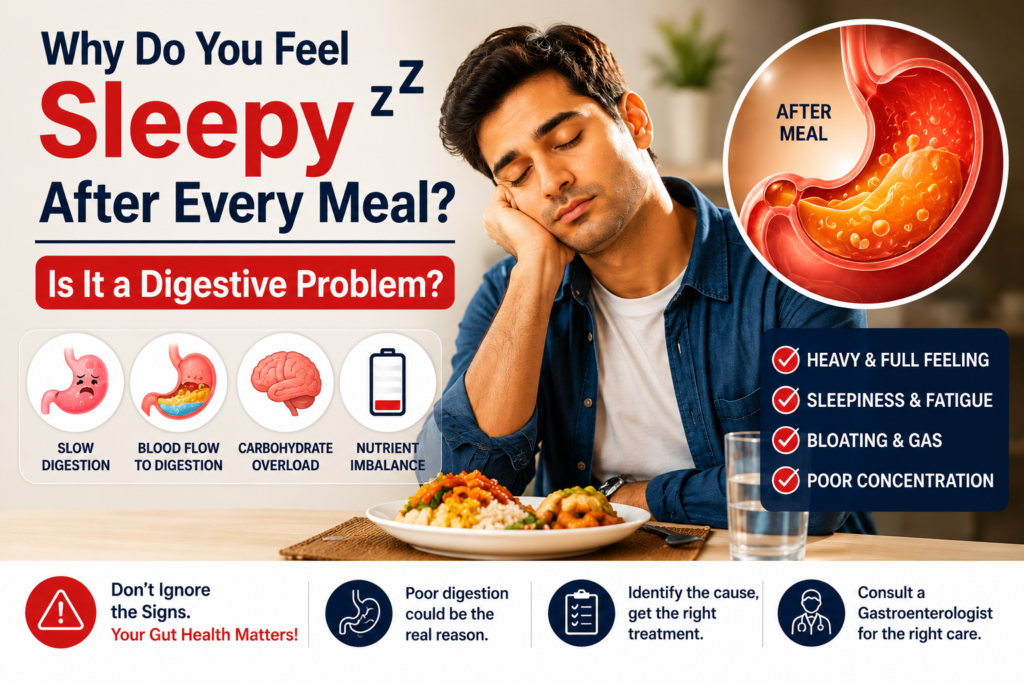
Almost everyone experiences a brief wave of tiredness after a large meal occasionally. However, when you consistently feel sleepy after every meal — regardless of what you eat or how much you sleep at night — your body may be sending an important signal worth paying attention to.
Most people dismiss post-meal sleepiness as laziness or simply the result of eating too much. In reality, this pattern often reflects a combination of digestive, metabolic, and sometimes more serious underlying processes. Moreover, in certain cases, persistent drowsiness after meals points directly to a condition that a gastroenterologist or physician needs to evaluate properly.
This guide explains the real reasons behind post-meal sleepiness — from normal physiology to genuine medical causes — and helps you understand when it is time to seek professional advice.
Is Post-Meal Sleepiness Normal?
A mild feeling of relaxation or slight drowsiness after eating is entirely normal — and there is a clear physiological reason for it. When you eat, your digestive system activates significantly. Blood flow redirects toward the gut to support digestion, digestive enzymes release in large quantities, and the gut-brain communication system sends satiety signals to the brain.
Furthermore, certain foods — particularly those high in carbohydrates and tryptophan — stimulate serotonin production, which promotes relaxation and can induce drowsiness. Consequently, a short, mild period of post-meal relaxation after a satisfying meal is a completely normal human experience.
However, the pattern becomes medically significant when it happens after every meal — including small ones — interferes with daily productivity, or is accompanied by other digestive or metabolic symptoms.
8 Reasons You Feel Sleepy After Every Meal
1. Blood Sugar Spike Followed by a Crash
This is the most common physiological cause of consistent post-meal sleepiness — and it is directly linked to what you eat. When you consume refined carbohydrates — white rice, bread, maida-based foods, sugary drinks, or packaged snacks — your blood sugar rises sharply and rapidly.
In response, your pancreas releases a large surge of insulin to bring blood sugar back down. However, this insulin response often overshoots — pushing blood sugar too low, too quickly. Consequently, this rapid drop in blood sugar triggers fatigue, brain fog, difficulty concentrating, and an almost irresistible urge to sleep.
This cycle — called postprandial hypoglycaemia or reactive hypoglycaemia — is extremely common in Indians given the high-carbohydrate nature of the typical Indian diet. Moreover, it frequently serves as an early warning sign of insulin resistance or prediabetes, particularly when it occurs consistently after every meal.
2. Insulin Resistance and Prediabetes
When cells stop responding efficiently to insulin, the body compensates by producing increasingly larger amounts. This chronic insulin excess — a hallmark of insulin resistance — directly impairs brain function and energy regulation after meals, causing pronounced and persistent post-meal drowsiness.
Additionally, people with undiagnosed prediabetes frequently report post-meal sleepiness as one of their earliest and most consistent symptoms — often years before their blood sugar rises enough to trigger a formal diabetes diagnosis. Therefore, consistent sleepiness after meals deserves blood sugar testing rather than dismissal.
3. Overeating and Portion Size
Large meals require significantly more digestive effort than moderate ones. Furthermore, when a person eats beyond their comfortable capacity, the body diverts a substantial proportion of its total blood supply toward the gut — reducing blood flow to the brain temporarily and causing genuine cognitive sluggishness.
This effect is most pronounced after meals heavy in fat and protein, which require the most digestive work. However, even large portions of healthy food can trigger significant post-meal fatigue in individuals with slower digestive motility or underlying digestive conditions.
4. Slow Gastric Emptying — Gastroparesis
Gastroparesis is a condition in which the stomach empties its contents into the small intestine more slowly than normal. Consequently, food sits in the stomach longer than it should — causing prolonged bloating, heaviness, nausea, and persistent fatigue that can last for hours after a meal.
Moreover, gastroparesis is frequently underdiagnosed in India because its symptoms — post-meal heaviness, bloating, and sleepiness — are commonly attributed to overeating or stress rather than recognised as a motility disorder. People with diabetes are at particularly high risk of developing gastroparesis, because chronic high blood sugar damages the vagus nerve that controls stomach emptying.
5. Irritable Bowel Syndrome (IBS) and Gut-Brain Axis Disruption
IBS involves a dysregulated communication pathway between the gut and the brain — commonly called the gut-brain axis. People with IBS often experience pronounced post-meal fatigue alongside their more recognisable symptoms of bloating, abdominal cramping, and altered bowel habits.
Furthermore, the chronic low-grade inflammation and nervous system dysregulation associated with IBS deplete energy more rapidly during and after digestion — producing a level of post-meal exhaustion that goes well beyond what the meal itself should cause.
6. Anaemia and Iron Deficiency
Anaemia — particularly iron deficiency anaemia, which is extremely prevalent among Indian adults — significantly worsens post-meal fatigue. When haemoglobin levels are low, the body struggles to deliver adequate oxygen to tissues during the increased metabolic demand of digestion. Consequently, post-meal periods trigger disproportionate tiredness in anaemic individuals.
Additionally, iron deficiency affects cellular energy metabolism independently of haemoglobin levels — meaning that even borderline iron deficiency without frank anaemia can produce meaningful post-meal fatigue.
7. Thyroid Disorders — Particularly Hypothyroidism
An underactive thyroid gland slows metabolism throughout the body — including digestive metabolism. People with hypothyroidism frequently experience pronounced post-meal sleepiness because their bodies process food and generate energy more slowly than normal.
Furthermore, hypothyroidism is extremely common among Indian adults — particularly women — and often goes undiagnosed for years because its symptoms, including fatigue and post-meal drowsiness, are attributed to stress or lifestyle rather than recognised as a hormonal disorder.
8. Poor Sleep Quality the Night Before
This cause is straightforward but frequently overlooked. When someone consistently sleeps poorly — whether due to stress, insomnia, or sleep apnoea — the normal post-meal relaxation response amplifies significantly. The mild drowsiness that follows a meal in a well-rested person becomes irresistible sleepiness in someone who is already sleep-deprived.
Moreover, sleep apnoea — characterised by repeated breathing interruptions during sleep — is increasingly common among Indian adults and produces intense daytime fatigue that peaks after meals. Consequently, anyone who feels genuinely exhausted rather than mildly drowsy after eating should consider whether their sleep quality needs assessment alongside their digestive health.
When Does Post-Meal Sleepiness Become a Medical Concern?
Mild post-meal relaxation after a large dinner is not a medical problem. However, consult a doctor promptly if your post-meal sleepiness:
- Occurs after every meal — including small, light ones
- Forces you to stop working or functioning for 30 minutes or more
- Accompanies bloating, nausea, or significant abdominal discomfort after eating
- Comes with other symptoms — unexplained weight gain, excessive thirst, frequent urination, or hair loss
- Has worsened progressively over the past few months
- Occurs alongside brain fog, difficulty concentrating, or persistent low energy throughout the day
Furthermore, if blood sugar testing reveals borderline or elevated results — even without obvious diabetes symptoms — post-meal sleepiness combined with these findings warrants immediate medical attention rather than a wait-and-see approach.
What Tests Help Identify the Cause?
Rather than guessing, targeted testing helps identify the exact cause of consistent post-meal sleepiness. Your doctor may recommend:
- Fasting Blood Sugar and HbA1c — to screen for prediabetes, diabetes, and insulin resistance
- Post-Prandial Blood Sugar (PPBS) — to measure blood sugar specifically two hours after a meal, revealing reactive hypoglycaemia patterns
- Complete Blood Count (CBC) — to detect anaemia and iron deficiency
- Thyroid Function Test (TSH) — to rule out hypothyroidism
- Liver Function Test (LFT) — to assess liver health, particularly if fatty liver or digestive sluggishness is suspected
- Gastric Emptying Study — if gastroparesis is suspected based on symptoms
Additionally, an abdominal ultrasound may be recommended if structural digestive causes need assessment alongside the blood panel.
Practical Steps to Reduce Post-Meal Sleepiness
While diagnostic testing identifies the underlying cause, several evidence-based lifestyle adjustments reduce post-meal fatigue for most people:
- Reduce refined carbohydrates — replace white rice and maida with whole grains, lentils, and vegetables to prevent sharp blood sugar spikes
- Eat smaller, more frequent meals — rather than two or three large meals that overwhelm the digestive system simultaneously
- Take a 10-minute walk after eating — physical activity after meals significantly blunts the post-meal blood sugar spike and reduces insulin response
- Stay well-hydrated — dehydration worsens post-meal cognitive sluggishness considerably
- Avoid lying down immediately after meals — this slows gastric emptying and worsens both reflux and post-meal fatigue
- Prioritise sleep quality — address sleep apnoea or insomnia if either is suspected
However, lifestyle adjustments address symptoms rather than causes. Therefore, identifying and treating the underlying medical reason — whether insulin resistance, anaemia, hypothyroidism, or a digestive motility disorder — produces far more lasting and meaningful improvement.
Frequently Asked Questions
Is feeling sleepy after every meal normal? Mild post-meal relaxation is normal. However, feeling consistently and significantly sleepy after every meal — especially small or light ones — is not normal and warrants medical evaluation. It often indicates blood sugar dysregulation, insulin resistance, anaemia, or a digestive condition.
Can post-meal sleepiness indicate diabetes? Yes — it can be an early sign of insulin resistance or prediabetes. Reactive hypoglycaemia — a blood sugar crash following a sharp post-meal spike — commonly causes pronounced post-meal sleepiness and frequently precedes a formal diabetes diagnosis by several years.
Which doctor should I see for post-meal sleepiness in Varanasi? For post-meal sleepiness with digestive symptoms — bloating, heaviness, nausea, or abdominal discomfort — a gastroenterologist is the most appropriate specialist. Dr. Shekhar Puri at Samarpan Gastro and Liver Clinic, Varanasi, specialises in diagnosing and treating the full range of digestive and liver conditions that contribute to post-meal fatigue.
What is the quickest way to stop feeling sleepy after meals? Reducing refined carbohydrates, eating smaller portions, taking a short walk after eating, and staying hydrated produce the fastest short-term improvement. However, lasting relief requires identifying and treating the underlying cause through proper medical evaluation and testing.
Can IBS cause sleepiness after meals? Yes. IBS disrupts the gut-brain axis significantly — producing post-meal fatigue, brain fog, and drowsiness alongside the more recognisable symptoms of bloating and altered bowel habits. Furthermore, the chronic inflammation and nervous system dysregulation associated with IBS deplete energy disproportionately during the digestive process.
Consult Dr. Shekhar Puri — Varanasi’s Trusted Gastroenterologist
Feeling sleepy after every meal is not something you should simply accept as your normal. When it happens consistently — particularly alongside digestive symptoms like bloating, heaviness, or discomfort — it deserves a proper evaluation rather than indefinite self-management.
Dr. Shekhar Puri at Samarpan Gastro and Liver Clinic, Varanasi specialises in diagnosing and treating the full spectrum of digestive, liver, and gut-brain axis conditions — from gastroparesis and IBS to fatty liver, GERD, and pancreatic disorders. With advanced diagnostic tools and a genuinely patient-centred approach, Dr. Puri provides clear answers and effective, personalised treatment plans.
Book your appointment today via WhatsApp — because persistent post-meal sleepiness is your body asking a question that deserves a proper answer.
According to the Indian Society of Gastroenterology, post-meal symptoms including fatigue, bloating, and heaviness are among the most commonly under-investigated digestive complaints in India — and early specialist evaluation significantly improves both diagnosis accuracy and long-term treatment outcomes.
⚠️ Medical Disclaimer: This blog is for general informational purposes only and does not constitute medical advice. Always consult a qualified doctor for diagnosis and personalised treatment.
