If you keep getting mouth ulcers again and again, it’s easy to blame it on spicy food, stress, or accidentally biting your cheek. But when ulcers show up frequently, take long to heal, or come with other digestive symptoms, the real cause may be sitting deeper — inside your stomach and gut. In this article, we’ll look at how gut health is connected to mouth ulcers, which digestive conditions are commonly linked to them, and when it’s time to see a gastroenterologist instead of just reaching for an ointment.
What Are Mouth Ulcers, Really?
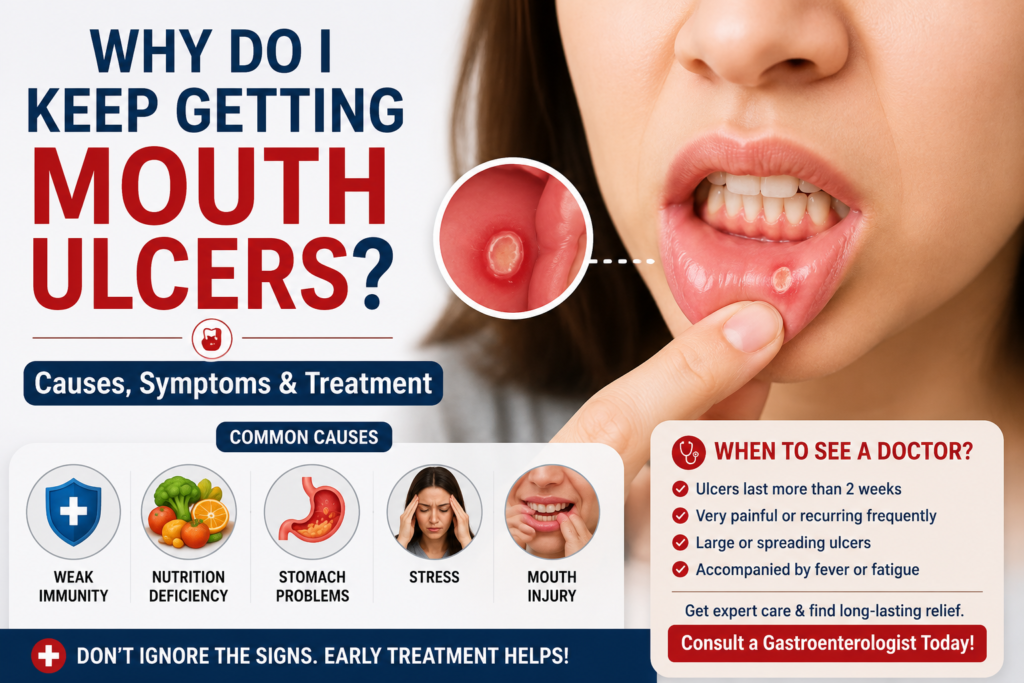
Mouth ulcers, also called canker sores, are small, painful sores that develop on the inside of the cheeks, lips, tongue, or gums. Occasional ulcers are common and usually heal within a week or two on their own. But when they keep coming back — especially more than 3–4 times a year — it’s a sign your body may be reacting to something internal rather than a one-off irritation.
How Can Stomach Problems Cause Mouth Ulcers?
Your digestive system and your mouth are part of the same connected tract, and gut health has a direct impact on how your body absorbs nutrients, manages inflammation, and fights infection — all of which affect how often you develop mouth ulcers.
Nutrient Deficiencies from Poor Absorption
Conditions that affect nutrient absorption in the stomach and intestines can lead to low levels of iron, vitamin B12, and folate — all of which are essential for healing skin and mucous membranes. When absorption is compromised, mouth ulcers often become frequent and slow to heal.
Acidity and GERD
Chronic acid reflux doesn’t just irritate your food pipe — the constant backflow of acid can also affect the mouth and throat, contributing to soreness and ulcer-like irritation, especially if reflux happens frequently at night.
Gastritis
Inflammation of the stomach lining, or gastritis, is often linked to a wider pattern of inflammation in the digestive tract, which some people experience as recurring mouth ulcers alongside stomach discomfort.
H. Pylori Infection
This common stomach bacterium, known for causing gastritis and peptic ulcers, has also been linked in some patients to recurring mouth ulcers. If you’re dealing with both stomach pain and frequent ulcers, this connection is worth investigating with your doctor.
Inflammatory Bowel Disease (IBD)
Conditions like Crohn’s disease and ulcerative colitis are known to cause mouth ulcers as one of their early or accompanying symptoms, often before the digestive symptoms are even diagnosed. This is one of the more overlooked links between gut and mouth health.
Food Intolerances
Sensitivities to certain foods, particularly gluten, can trigger both digestive discomfort and mouth ulcers as part of the same inflammatory response in the body.
Signs Your Mouth Ulcers May Be Linked to Your Stomach
Watch for these patterns, which suggest a gut-related cause rather than a one-off irritation:
- Ulcers that keep recurring every few weeks
- Ulcers appearing alongside bloating, acidity, or stomach pain
- Fatigue or pale skin (possible signs of iron or B12 deficiency)
- Diarrhea or irregular bowel movements alongside mouth sores
- Unexplained weight loss
- Ulcers that take longer than 2–3 weeks to heal
When Should You See a Gastroenterologist?
Occasional, isolated mouth ulcers usually don’t need specialist care. But you should consult a gastroenterologist if:
- Mouth ulcers are recurring frequently, not just once in a while
- You also experience ongoing stomach pain, acidity, or bloating
- You notice fatigue, weakness, or unexplained weight loss
- Over-the-counter ointments and home remedies aren’t helping
- A doctor has mentioned a possible link to your digestion but hasn’t investigated further
At Samarpan Gastro and Liver Clinic, Dr. Shekhar Puri helps patients get to the actual root cause of recurring digestive-linked symptoms — including mouth ulcers connected to gastritis, acidity, or deeper gut issues — rather than treating them in isolation.
How Is the Cause Diagnosed?
To find out whether your mouth ulcers are stomach-related, a gastroenterologist may recommend:
- Blood Tests — to check for iron, vitamin B12, and folate deficiencies
- H. Pylori Testing — a breath, stool, or blood test to check for this common stomach bacterium
- Endoscopy — to examine the stomach lining directly if gastritis or peptic ulcers are suspected
- Stool Tests — especially if inflammatory bowel disease is a possibility
Our endoscopy services at the clinic help pinpoint exactly what’s happening inside the stomach lining, so treatment can target the actual cause rather than just the symptom.
Treatment
Once the underlying cause is identified, treatment usually involves a combination of:
- Correcting deficiencies — iron, B12, or folate supplementation where needed
- Managing acidity — through medication and dietary changes for reflux or gastritis
- Treating infection — a course of antibiotics if H. pylori is detected
- Managing digestive disorders — a longer-term treatment plan if IBD or other digestive disorders are the underlying cause
Foods and Habits to Watch
- Very spicy, acidic, or fried food can aggravate both acidity and ulcer irritation
- Skipping meals or eating erratically can worsen gastritis symptoms
- Chronic stress affects gut function and immune response, making ulcers more likely
- Smoking and alcohol can irritate both the stomach lining and the mouth
FAQs
Can stomach problems really cause mouth ulcers? Yes. Conditions like acidity, gastritis, H. pylori infection, and nutrient deficiencies from poor absorption can all contribute to recurring mouth ulcers.
What vitamin deficiency causes mouth ulcers? Low levels of iron, vitamin B12, and folate are commonly linked to frequent or slow-healing mouth ulcers.
Is H. pylori linked to mouth ulcers? Some patients with H. pylori infection, which also causes gastritis and peptic ulcers, report a pattern of recurring mouth ulcers alongside their stomach symptoms.
When should I worry about recurring mouth ulcers? If ulcers keep coming back frequently, take longer than 2–3 weeks to heal, or appear alongside stomach pain, fatigue, or weight loss, it’s worth getting evaluated.
Which doctor should I see for mouth ulcers linked to digestion? A gastroenterologist can investigate the digestive causes behind recurring mouth ulcers, especially when they’re paired with stomach symptoms.
Related Reads:
- Peptic Ulcer Treatment in Varanasi
- Digestive Disorders — Full Service Page
- Endoscopy Services in Varanasi
- Why Does Food Come Back Into My Mouth After Eating? Is It Acid Reflux or GERD?
- How Do You Know If Your Acidity Is Becoming Serious? 7 Warning Signs
Dealing with recurring mouth ulcers along with stomach discomfort? Book a consultation at Samarpan Gastro and Liver Clinic, Varanasi, and get to the root cause
